The Home Fridge Is Not a Pharmacy: Keeping Cold-Chain Medicines Safe in the UK
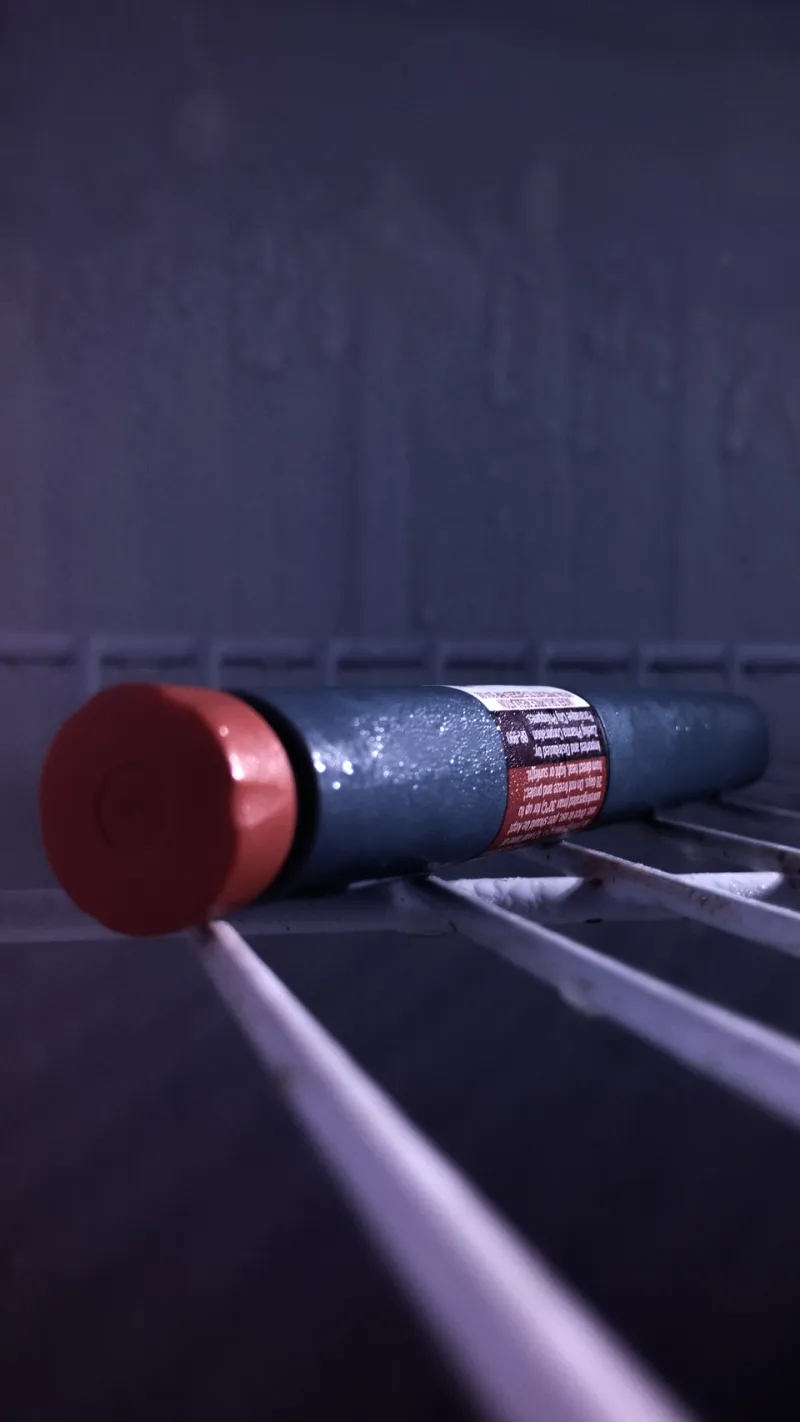
Photo: Ian1237, CC BY-SA 4.0, via Wikimedia Commons
Cold-chain medicines do not stop being cold-chain medicines when they leave the pharmacy. For a growing number of UK patients, the final link in the supply chain is a domestic refrigerator — an appliance designed for milk, leftovers and salad, not for calibrated pharmaceutical storage. In 2026, as more injectable and biologic treatments are managed at home, it is worth treating the kitchen fridge as part of the prescription rather than a convenient cupboard.
Why a domestic fridge needs a second look
Medicines labelled for storage at 2°C to 8°C are usually described as needing refrigeration. That range sounds simple, but household fridges cycle through warmer and cooler periods. The door is the warmest zone and is affected every time it is opened. The area near the freezer compartment may run colder than the rest. An overloaded fridge can struggle to circulate air, while an almost empty one may recover temperature less evenly.
A fridge that feels cold is not proof that it is suitable. A simple fridge thermometer, placed where medicines are kept, gives a more useful picture than a dial marked with vague settings. Patients who rely on a fridge for insulin, certain biologics or specific eye drops should know how their appliance behaves before a problem arises.
Read the label before the fridge door
Storage instructions can differ before and after first use. Some insulin products are kept in the refrigerator before use but may be kept at room temperature for a limited period once opened or first used. Some eye drops have specific advice about refrigeration before opening and room-temperature storage afterwards. Biologic medicines may have detailed instructions about keeping the product in its original carton to protect it from light.
The carton, the patient information leaflet and the pharmacy dispensing label should be read together. If they appear to conflict, or if the advice is unclear, ask the pharmacist rather than choosing the most convenient option. It is also important not to return a medicine to the fridge after it has been kept at room temperature for the permitted period, unless the manufacturer’s instructions specifically say so. Repeated warming and cooling is not a neutral act.
A stable place, not simply a cold place
Where a medicine must be refrigerated, the aim is stable storage within the stated range. A middle shelf, away from the door and away from the freezer compartment, is often a sensible starting point. Keep the medicine in its original carton, which protects it from light and carries the batch details. A clean, labelled container can keep medicines separate from food, but it should not obscure the original packaging.
Do not freeze cold-chain medicines unless the label explicitly allows it. Freezing can damage proteins, suspensions and other formulations, and the harm may not be visible. Keep medicines out of reach of children, and avoid storing them in the door pockets where temperature swings are greatest. A fridge thermometer should be checked regularly, and the reading noted if there is any doubt.
When the power goes off
A power cut is one of the most common reasons for a temperature excursion. Keep the fridge door closed as much as possible, note the time the power failed and check the thermometer when it returns. A well-filled fridge may hold its temperature for a period, but this cannot be assumed. Opening the door repeatedly to inspect the medicine will only speed the rise in temperature.
If the thermometer shows that the medicine has been outside its labelled range, do not guess and do not automatically discard it. Contact the pharmacist, GP or specialist service for advice. Give the medicine name, strength, batch number, the temperature reached and the length of time involved. Some excursions may be acceptable; others may mean the medicine should not be used. Visible changes such as cloudiness, particles or discolouration are a warning, but the absence of visible change does not prove that a medicine is unaffected.
Travel, work and hotel fridges
Travelling with a refrigerated medicine requires planning. A cool bag with a wrapped ice pack can help for short journeys, but the pack should not touch the medicine directly. Avoid leaving medicines in a car or in direct sunlight. For air travel, carry the medicine in hand luggage where possible, with a copy of the prescription or a pharmacy letter, and check the airline’s requirements in advance.
Hotel minibars and communal workplace fridges are rarely suitable for precise storage. They are opened frequently and may have no thermometer. If a short trip is planned, ask the pharmacist whether the medicine can be kept at room temperature for the relevant period. Do not assume that a hotel fridge is cold enough simply because it feels chilled.
The pharmacist’s role
A temperature excursion is a medicines information question, not a test of memory. The pharmacist can check the product’s storage requirements, the likely impact of the excursion and whether a replacement is needed. They can also advise on what to do if a medicine has been frozen or if a replacement may take time to obtain.
In 2026, home care increasingly depends on patients and carers managing complex medicines correctly. The domestic fridge can be a safe part of that work, but only when it is treated with the same care as the prescription itself. When in doubt, keep the door closed, keep the packaging, note the temperature and call the pharmacy.