Names That Echo: Reducing Look-Alike Medicine Risk at the UK Counter

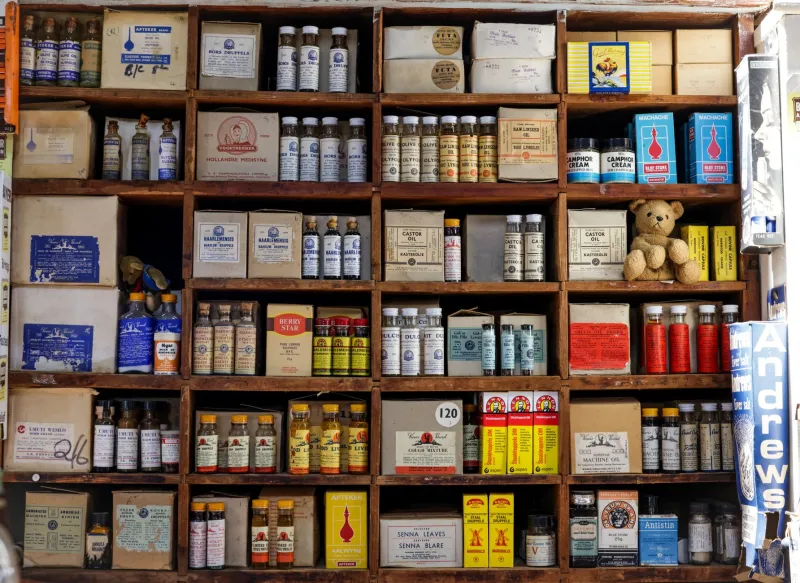
Photo: Betty Longbottom, CC BY-SA 2.0, via Wikimedia Commons
In a busy dispensary, two medicine boxes can share a similar shape, colour and rhythm of letters. That is the everyday reality behind the term look-alike, sound-alike medicines, often shortened to LASA. It is not a sign that pharmacy teams are careless. It is a known risk that UK manufacturers, regulators, NHS organisations and community pharmacies manage through several layers of defence.
For patients, the practical message is reassuring rather than alarming. A little attention at the counter and at home can add a useful final check without turning every prescription into a source of anxiety.
Why some names carry more risk
Medicine names become riskier when they look or sound similar, especially if they also share a strength, a dosage form or a common use. Names that begin with the same letters, have a similar number of syllables or differ by only a letter or two are more likely to be confused in a hurried conversation, a handwritten note or a crowded shelf.
Well-known examples used in UK safety teaching include carbamazepine and carbimazole, prednisolone and prednisone, and hydrOXYzine and hydrALAZINE. The list is not exhaustive, and many other pairs exist. What matters is the principle: similarity increases the chance of a mix-up, particularly when the products are stored near one another or when a patient is used to collecting the same box each month.
Tall-man lettering is one response. By capitalising the part of a name that differs, such as predniSONE and prednisoLONE, the label gives the eye a stronger cue. It is not a complete solution, but it is a useful part of a wider system that also includes packaging design, barcode scanning and checking procedures.
The safeguards before the medicine reaches you
Manufacturers and regulators pay attention to how a pack looks and reads. Strength should be prominent, the name should be clear, and similar products should not be made to look interchangeable when they are not. Barcodes and electronic picking systems add another layer in many pharmacies, while shelf dividers, warning stickers and separated storage help reduce the chance of a wrong box being reached for.
Dispensing is more than picking a pack from a shelf. Pharmacy teams check the patient, the medicine, the strength, the form and the directions. For higher-risk medicines, a second check or a read-back may be used. Good practice also encourages staff to ask what the medicine is for when there is any doubt, because the intended condition can reveal a mismatch that the name alone does not.
These checks are not a comment on any individual patient. They are a normal part of safe pharmacy work in the UK, and they are strongest when patients feel able to ask a question rather than simply take the bag and leave.
At the counter: what to check
When you collect a medicine, compare the name and strength on the label with what you expected. Check the form as well: a tablet, capsule, liquid and patch are not interchangeable. If the box looks different from last time, ask whether the manufacturer or packaging has changed. A different colour or design is not automatically an error, but it is a reasonable prompt for a conversation.
If someone else collects on your behalf, make sure they know the medicine name, strength and what it is for. Using one community pharmacy for regular medicines can help, because the team builds a clearer picture of what you usually receive. A current medication list, kept with your repeat slips or in a phone note, is also useful.
Do not rely on tablet appearance alone. Many different medicines are small and white, and manufacturers can change the look of a product. The label and the original packaging are more reliable than memory or colour.
At home: simple storage habits
Keep medicines in their original packaging wherever possible. Decanting tablets into unlabelled tubs or mixed compartments makes it harder to identify them later. If you use a pill organiser, keep the original boxes so the name and strength remain available, and label the organiser clearly.
If two people in a household take medicines with similar names, store them apart. A labelled box or a separate shelf can be enough. Keep the patient information leaflet with the pack, and check repeat deliveries before putting them away. Return unwanted medicines to a pharmacy rather than keeping a confusing collection in a cupboard.
These habits are especially useful for medicines taken at home over long periods. They do not replace professional checks, but they make the home environment less likely to contribute to a mix-up.
If a label or pack looks confusing
Not every unusual pack is a mistake. Manufacturers revise designs, change suppliers and update artwork. But if a label or pack seems likely to cause confusion, tell your pharmacist. They can check the dispensed item against the prescription and explain what has changed.
The MHRA's Yellow Card scheme is the UK route for reporting suspected problems with medicines. It is not an emergency service, and a report does not prove that a product caused harm. If you are concerned that a label or pack could lead to a mix-up, your pharmacist can advise; you can also submit a Yellow Card report so the regulator can look for patterns. Reports are most useful when they are specific and calm: the medicine name, the strength, what seemed confusing and what happened.
A system of checks, not a reason to worry
Look-alike, sound-alike medicines are managed through design, storage, technology and human checking. Patients are a valuable part of that system, but they are not the only defence. Asking a question at the counter, keeping packaging intact and reporting a genuinely confusing label are modest actions. Together, they help make UK pharmacy safer without turning ordinary medicine use into a source of fear.