Closing the Loop at Home: A 2026 Guide to Sharps Disposal for UK Injectors
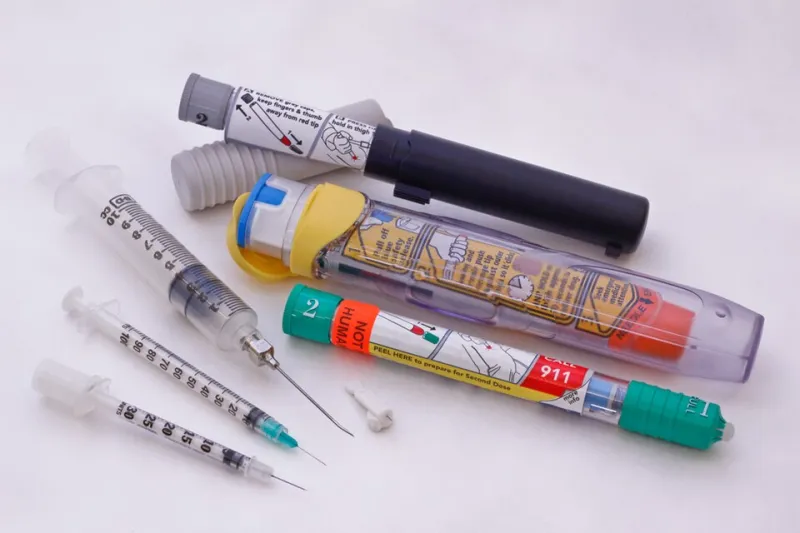
Photo: The U.S. Food and Drug Administration, Public domain, via Wikimedia Commons
For anyone who injects at home — whether insulin, a biologic, an anticoagulant or a fertility medicine — the used needle is only half the story. The other half is what happens after the injection. A sharps bin is not a lifestyle accessory, and it does not belong beside the fridge or on the kitchen worktop. It is a small piece of clinical waste infrastructure, and it needs a sensible place in the home and a reliable route out of it.
Why the household bin is the wrong destination
A used needle can carry blood-borne viruses and can cause a penetrating injury long after the medicine has been delivered. Once a sharps container goes into a general waste bag, the people who collect, sort and process that waste have no way of knowing what is inside. A capped needle can still come loose. A pen needle left on a pen can pierce a bin liner. The risk is not theoretical, and it is not limited to healthcare workers.
In the UK, used sharps from home treatment are treated as clinical waste. They should not go into general household waste, recycling, food waste or a public litter bin. They should not be flushed, posted or left in a communal bin store. The correct route is an approved sharps container, followed by a local return or collection scheme.
What counts as a sharps item
Household sharps usually include needles, pen needles, lancets, syringes with attached needles, and some infusion sets. A pre-filled injection pen is not normally a sharps item once its needle has been removed, but the needle itself is. Blood-testing lancets are small, but they are still sharps. Used swabs, test strips and packaging are not sharps unless they are contaminated with blood or attached to a needle.
If you are unsure about a particular device, ask the pharmacy that supplied it or the clinic that prescribed it. Do not dismantle a needle from a syringe by hand, and do not try to recap a needle after use unless your device instructions specifically require it. Most home injectors are taught to place the needle directly into the sharps container or to use a device with a built-in safety mechanism.
Choosing and using an approved container
An approved sharps container is rigid, puncture-resistant and designed to close securely. In the UK, these are often supplied through a pharmacy, a GP practice, a specialist clinic or a local council scheme. A kitchen tub, glass jar or drinks can is not a substitute. Neither is a cardboard box lined with a plastic bag.
Use the container upright. Do not fill it above the marked line — usually around three-quarters full — because containers need space to close safely. Keep the lid on between uses. When the container is ready to close, close it firmly and do not reopen it. If your container has a temporary lid for use during the day, follow the manufacturer's instructions and secure the final lid only when the container is full.
Label the container if your local scheme asks you to. Keep it out of reach of children and pets, and away from food preparation areas. A high cupboard, a locked cabinet or a dedicated storage box in a utility room is usually more suitable than a kitchen surface. The aim is not to hide the container, but to keep it secure and separate from everyday household waste.
Storing sharps at home without creating a clinical waste depot
A home does not need a row of bins. Most people need one container in use and, at most, one spare. Store the spare flat and out of reach until it is needed. Keep a note of your local collection or return arrangements so that a full container does not sit in the house for months.
If you travel, use a small travel sharps container rather than putting loose needles into a bag or suitcase. Ask your pharmacy or clinic about temporary arrangements before you go. Do not leave used sharps in a hotel room bin, a holiday let or a public toilet. If you are away from home for a long period, check whether a local pharmacy or hospital can advise on safe disposal in that area.
How collection and return schemes differ across the UK
There is no single UK-wide doorstep system for household sharps. Arrangements vary by council and by health board, and sometimes by pharmacy. In England, many councils run clinical waste collections for household sharps, often by appointment or referral. Some community pharmacies accept full containers where they are part of a local scheme, but this is not universal. GP practices and specialist clinics may also provide containers or advice for patients under their care.
In Scotland, Wales and Northern Ireland, the route depends on the local authority and health board. Some areas provide a collection service; others rely on pharmacies or clinics. The practical step is to check your council's clinical waste pages and then telephone your usual pharmacy to ask whether it accepts full sharps containers. Do not assume that a pharmacy will take a container just because it sells needles or pens.
What to do if you find a discarded needle
Do not pick up a discarded needle with your bare hands. If it is in a public place, contact the local council or environmental health team and describe the location. If you must move it because a child or animal is at immediate risk, use tongs or a litter picker and place it in a rigid, puncture-resistant container, then seek local advice on disposal. Wash any needlestick injury with soap and running water and seek urgent medical advice.
A simple household routine
Check the fill line once a week. Keep a spare container if your scheme allows it. Note the collection date or the pharmacy that accepts returns. Tell everyone in the household where the container is kept and why it is not ordinary rubbish. When you collect a repeat prescription, ask whether your sharps container supply and disposal route are still current.
Safe sharps disposal is not an afterthought to treatment. It is part of using an injectable medicine at home responsibly. A few minutes spent finding the right container and the right local route keeps needless risk out of the waste stream — and out of the kitchen.