Where the Line Falls: Tablet Splitting, Accuracy and the Limits of a Kitchen Knife
Few questions arrive at the pharmacy counter as casually as this one: can I just cut it in half? It sounds like a matter of convenience, a way to stretch a prescription or make a tablet easier to swallow. In practice it is a question about pharmaceutical design, dose precision and, occasionally, patient safety. The answer is sometimes yes, often no, and rarely as simple as the score line suggests.
What a Score Line Is Actually Telling You
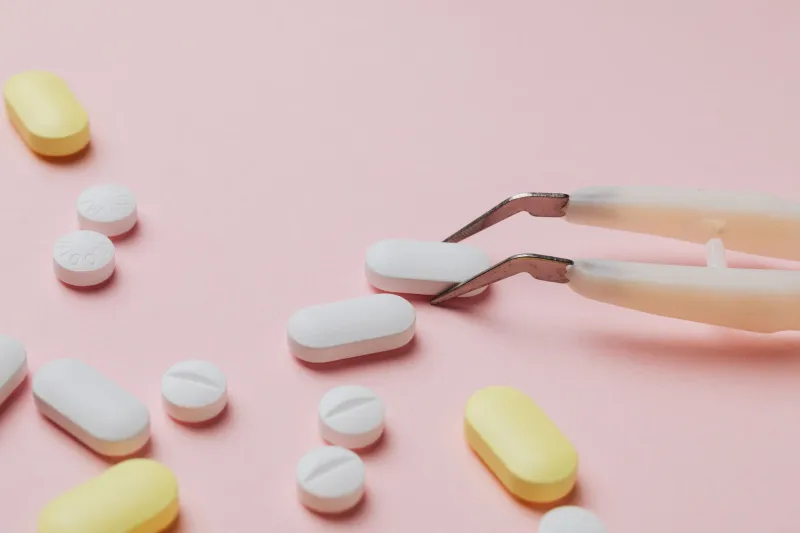
A score line — the groove pressed into the surface of a tablet during manufacture — is a functional feature, not decoration. Where it exists, the manufacturer has usually assessed that the tablet can be divided and that each portion will contain an acceptable quantity of the active substance, with a break that is reasonably clean.
Crucially, a score line indicates that splitting is technically feasible. It is not an instruction to split. The permitted practice is described in the product's Summary of Product Characteristics, the reference document that underpins the patient information leaflet. Where halving is acceptable, that document will normally say so, and it may specify that a tablet cutter should be used rather than a knife.
Many tablets have no score line at all. Some of these are physically difficult to break evenly; others are designed so that the outer layer performs a specific job that a fractured edge would compromise. A tablet without a groove is not simply a scored tablet that skipped a step.
The Arithmetic Problem With Halves
Even where splitting is permitted, uniformity is imperfect. Studies of manually divided tablets have consistently found weight variation between halves, and the variation grows when the tablet is small, brittle or awkwardly shaped. For a medicine with a wide therapeutic margin — where a modest overshoot or undershoot in dose has little clinical consequence — that variability may be tolerable.
For a narrow therapeutic index medicine, it matters a good deal more. Levothyroxine, warfarin, digoxin and certain antiepileptic medicines sit in this group, where small changes in circulating dose can shift clinical effect or monitoring results. A patient alternately receiving 90% and 110% of the intended dose may produce confusing blood test results, and the cause may not be obvious to anyone involved.
This is why the sensible route for a repeated half-dose is usually a prescription for the appropriate strength. A 25 microgram tablet is a more reliable way of delivering 25 micrograms than half of a 50 microgram tablet. Where the required strength does not exist as a licensed product, a pharmacist can discuss the options with the prescriber.
Modified-Release: A Design That Depends on Staying Whole
Modified-release tablets are engineered so that the drug is liberated over hours rather than minutes. The mechanism may be a matrix that slowly erodes, a membrane that controls diffusion, or an osmotic system that releases contents through a laser-drilled hole.
Breaking such a tablet defeats the design. The full dose can be delivered far faster than intended, and for medicines formulated to be released gradually — some opioids, calcium channel blockers, methylphenidate products, certain diabetes medicines — the consequences of a rapid bolus are not hypothetical. Many modified-release products are explicitly not to be divided, and the abbreviation 'MR', 'SR', 'XL' or 'CR' in a product name is a prompt to check before doing anything irreversible.
Enteric Coatings and the Reason for the Shell
An enteric coating is a deliberate delay. It protects the stomach from a drug that irritates the gastric lining, or protects a drug from gastric acid so that it survives to be absorbed further along the gut. Some enteric-coated tablets are designed to release in the intestine for reasons of efficacy; others protect the oesophagus and stomach in patients at risk of ulceration.
A broken enteric-coated tablet has lost both functions. The exposed surface releases the active substance in the stomach, which may cause discomfort, reduce absorption or simply render the coating pointless. Enteric-coated aspirin is a familiar example, and the coating is the whole point of the product.
The same logic applies to capsules containing coated granules or pellets: opening and sprinkling is sometimes authorised for patients who cannot swallow, but only where the product literature permits it. Otherwise the granules should stay where the manufacturer put them.
Dispersible, Orodispersible and the Swallowing Conversation
When the underlying problem is swallowing rather than dose, splitting is often the wrong solution to the right question. Dispersible tablets dissolve in water; orodispersible tablets and some buccal formulations are placed on the tongue; liquids and granules offer further routes. A pharmacist can advise on which of these exist for a given medicine and whether the prescriber needs to authorise a change of formulation.
It is worth noting that dispersible tablets are not interchangeable with ordinary tablets on a like-for-like basis. Some contain different salts or quantities of the active ingredient, and some carry higher sodium loads. The dose printed on the box refers to that specific product, so a straight swap requires a conversation.
Tablet Cutters, Knives and the Kitchen Drawer
Purpose-made tablet cutters are inexpensive and generally produce a more consistent break than a kitchen knife, particularly for larger tablets. They do not, however, turn an unsuitable tablet into a suitable one. A cutter cannot restore an enteric coating, prevent a modified-release matrix from dumping its contents, or overcome the fact that the product was never designed to be halved.
Practical points for those who do split tablets with professional agreement: divide only one tablet at a time, use the cutter on a clean surface, wash hands afterwards, and store the second half in a labelled container away from children and pets. Halves can be less stable than whole tablets once the protective surface is breached, so it is unwise to prepare a week's worth in advance.
Staff in care homes and pharmacies face an additional consideration. Crushing or splitting medicines for administration can convert a licensed product into one used outside its terms, transferring legal and clinical responsibility to the person who authorises the practice. For hazardous medicines, including certain cytotoxic and hormonal products, there are occupational health reasons to avoid any manipulation at all.
A Question Worth Asking Before the Knife Comes Out
The practical rule is straightforward. Read the label and the leaflet for any instruction about dividing, crushing or dispersing. If the product is scored and the literature permits division, a cutter is reasonable. If the tablet is modified-release, enteric-coated or carries an explicit warning, it should stay whole unless a pharmacist or prescriber has confirmed otherwise for that specific product.
And if the reason for splitting is cost, swallowing difficulty or an inconvenient pack strength, say so at the counter. Those are problems with established solutions: an alternative strength, a different formulation, or a reviewed prescription. The half-tablet question is usually a symptom of something a short conversation can resolve properly — with a dose you can actually rely on.