Millilitres, Not Mouthfuls: Choosing the Right Measure for Liquid Medicines in the UK
A teaspoon is a familiar object in every UK kitchen, which is precisely why it can feel like a reasonable way to measure a liquid medicine. But a spoon used for stirring tea or serving sugar is not a calibrated medical device. Liquid medicines are formulated and labelled around precise volumes, usually in millilitres, and the difference between one spoon and another can be large enough to matter clinically — particularly for infants, frail older adults and anyone taking a medicine with a narrow margin between a helpful dose and a harmful one.
Why a Kitchen Spoon Cannot Be Calibrated
Domestic teaspoons are not standardised. Studies of household cutlery have repeatedly found that a teaspoon may hold anywhere from roughly 3 ml to 7 ml, while tablespoons can vary even more widely. A traditional 5 ml medicine spoon is a different object: it is designed for the purpose and marked accordingly. The ordinary teaspoon from the cutlery drawer is not.
For a 5 ml dose, an error of 1 ml to 2 ml represents a substantial proportion of the intended amount. If that error is repeated several times a day, the cumulative difference can become meaningful. The issue is not that kitchen spoons are unclean or that parents and carers are careless. The issue is that the tool does not carry a reliable scale.
What the Label Is Really Telling You
UK medicine labels generally express liquid doses in millilitres, even when the instruction sounds conversational. A label may say ‘give 5 ml’ rather than ‘give one teaspoon’, and that wording is deliberate. It directs the user to a measurable volume rather than an approximate household object.
Concentration matters as much as volume. Two liquid paracetamol products may contain different amounts of medicine in each 5 ml, so the same volume can deliver different doses. A dosing device supplied with one product may not be appropriate for another. This is one reason why the measuring device should stay with the medicine it came with, and why a device from an old bottle should not be used with a new product unless the markings and dose match.
Some labels include a dose band such as ‘2.5 ml’ or ‘7.5 ml’. A 5 ml medicine spoon cannot measure those volumes accurately unless it has additional graduations. Guessing half a spoonful reintroduces the same problem the millilitre label was designed to avoid.
The Devices That Belong Beside the Bottle
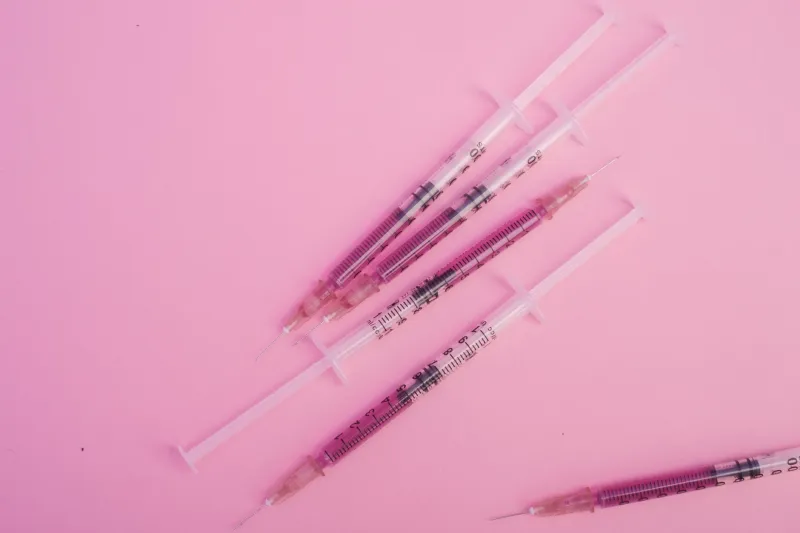
An oral syringe is often the most precise option, especially for small volumes and for babies or young children. These syringes are marked in millilitres and sometimes in half-millilitre or smaller increments. Many are supplied with a bottle adaptor or bung that allows the syringe to be fitted to the bottle neck and used cleanly. The pharmacy team can show a carer how to draw up the dose, remove air bubbles according to the manufacturer’s instructions and give the medicine safely.
A medicine dosing cup is another appropriate choice for larger volumes. It should be marked in millilitres, placed on a flat surface and read at eye level. A kitchen cup, mug or tumbler is not a substitute, even if it looks as though it holds roughly the right amount.
There is also a place for the traditional 5 ml medicine spoon, provided it is the calibrated type and the prescribed dose matches its capacity. It is the uncalibrated household spoon that causes concern, not the purpose-made measure.
Asking at the Counter
Patients and carers should feel able to ask a simple question at the pharmacy: ‘Is there a measuring device that matches this dose?’ Community pharmacy teams in the UK are used to supplying oral syringes and dosing cups, and they can explain how to use them. For a child’s medicine, it is reasonable to ask specifically for an oral syringe if one has not been provided. For an older person with reduced vision or difficulty holding a small syringe, it is equally reasonable to ask for a device with clearer markings or for advice on how a carer can help.
It also helps to check that the device fits the bottle. Some syringes need a particular adaptor; some cups are designed for a specific product. If the device is missing from a new box, or the markings have worn away, the pharmacy should be the first port of call rather than the kitchen drawer.
When the Measure Is Missing or Unclear
If a liquid medicine arrives without a measuring device, do not estimate the dose with cutlery. Contact the pharmacy that supplied it and ask for a suitable measure. If the label is unclear, damaged or missing, contact the pharmacy or the prescriber before giving another dose. The same applies if the concentration has changed, if a different brand has been dispensed, or if the dose seems inconsistent with what was given previously.
If a dose has already been measured incorrectly, seek advice promptly from a pharmacist, NHS 111 or another healthcare professional. They can assess the situation and advise on what to do next. It is not necessary to wait for symptoms before asking for guidance.
A Small Habit With a Large Margin for Error
Good measurement is a routine, not a special effort. Keep the correct device with the medicine, read the label in good light, use the same technique each time and replace any device whose markings have become illegible. For families and carers, this is a small change that reduces a familiar source of error.
Health literacy is not only about understanding medical language. It is also about having the right tools to act on clear instructions. In 2026, UK pharmacy teams remain well placed to provide those tools and to explain their use. The kitchen spoon can stay in the kitchen; the medicine measure belongs with the medicine.