The Meal Matters: Making Sense of Food Instructions on UK Medicine Labels
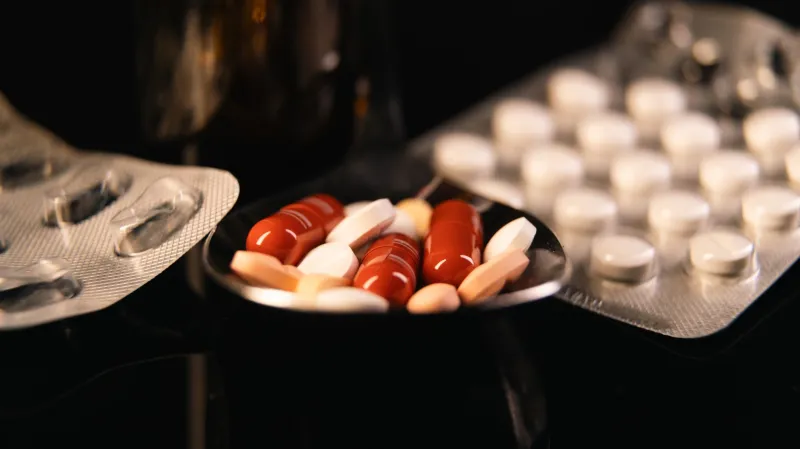
Few instructions on a medicine label look as simple as 'take with food'. Yet that short phrase can raise practical questions within minutes of leaving the pharmacy. Does it mean a full meal, a slice of toast or simply a glass of milk? What counts as an empty stomach? And why should a medicine care whether breakfast has happened? At Pharmi-Med, we treat these questions as part of health literacy rather than minor detail. The answer is usually straightforward, but it depends on the medicine, the patient and the reason the instruction was written in the first place.
Why a Meal Can Change a Medicine
Food is not neutral. It changes the speed at which the stomach empties, the acidity of the gut, the flow of blood to the digestive tract and the way some medicines dissolve. A meal can also physically bind to a medicine, reducing how much is absorbed, or buffer the stomach lining and reduce nausea. In some cases, food improves absorption; in others, it delays it or lowers it. The label is therefore not asking you to be fussy. It is trying to reproduce the conditions under which the medicine was tested and licensed.
There is a second, more practical reason. Many medicines are tolerated better when taken with food, particularly if they are known to cause nausea, indigestion or loose stools. In that situation, food is less about absorption and more about comfort and adherence. A patient who stops a medicine because it upsets their stomach is not receiving the benefit the prescriber intended.
Three Common UK Examples
Levothyroxine: the empty-stomach rule
Levothyroxine, used to replace thyroid hormone, is a familiar example of a medicine that is sensitive to food and drink. Its absorption is reduced by food, coffee, calcium supplements, iron and some high-fibre products. UK labels and patient information leaflets commonly advise taking it on an empty stomach, often before breakfast, with a gap before eating. The exact wording varies, so the important principle is consistency: take it in the way your label or pharmacist has advised, and keep that routine stable. If you change from taking it before breakfast to taking it with breakfast, your thyroid blood tests may no longer reflect the same dose.
Metformin: food as a buffer
Metformin is widely prescribed in the UK for type 2 diabetes. Standard-release tablets are usually taken with or just after food because this reduces gastrointestinal side effects such as nausea, abdominal discomfort and diarrhoea. Modified-release preparations often carry instructions to take them with the evening meal. Here the meal is mainly a tolerability measure rather than a way of boosting absorption. Patients who take metformin on an empty stomach and feel unwell should not simply stop it; they should check whether the timing can be adjusted.
Antibiotics: when dairy and minerals matter
Antibiotics vary considerably. Nitrofurantoin, used for some urinary tract infections, is often taken with food to improve absorption and reduce nausea. Tetracyclines such as doxycycline are different: they can be taken with food if needed for stomach upset, but they bind to calcium, iron and some antacids, so milk, yoghurt and mineral supplements may need to be spaced around the dose. Other antibiotics may be labelled 'with or without food' because the difference is not clinically important. This is why a general rule such as 'all antibiotics should be taken with food' is unhelpful. The specific medicine matters.
What 'With Food' and 'Without Food' Actually Mean
In UK labelling, 'with food' generally means during or shortly after a meal. It does not usually require a large meal, but a proper snack is better than a single biscuit if the aim is to protect the stomach. 'On an empty stomach' usually means about an hour before food or two hours after food, though the precise gap depends on the medicine. 'Before breakfast' is more specific and is often used for medicines such as levothyroxine. 'With or after food' gives some flexibility but still points to mealtime.
Problems arise when the label is vague or when a patient's routine does not match it. Shift workers, people who fast for religious reasons, older patients with small appetites and anyone who eats irregularly may need a more tailored explanation. A medicine that must be taken with food can be difficult if the patient is not eating meals at conventional times. That is a conversation for the pharmacy counter, not a reason to guess.
When the Label Is Silent or Ambiguous
Some labels say only 'take as directed'. Others use terms that mean different things to different people. A patient may reasonably ask whether a glass of milk counts as food, whether a medicine can be taken with tea, or whether 'after food' means immediately after or within an hour. These are not foolish questions. The pharmacist can check the product's licensed information and the reason for the instruction, then translate it into a workable routine.
It is also worth checking whether the advice applies to every dose or only to the first dose of the day. Some medicines are taken before food at one time and with food at another. Some require a fixed gap from dairy or supplements. A pharmacist can distinguish between a strict absorption rule and a general comfort measure, which helps patients decide what to do when life does not go to plan.
A Short Script for the Pharmacy Counter
When the label is unclear, a short, specific question is usually enough. You might say: 'The label says take this with food. Does that mean with a meal, just after a meal, or with a snack? Are there any foods or drinks I should keep apart from this dose? What should I do if I forget and have already eaten?' For an empty-stomach medicine, ask: 'How long before food should I take it, and does tea, coffee or milk count?' For a medicine taken once daily, ask: 'Does it matter if I change the time of day, as long as I keep the same relationship to food?'
It also helps to mention other medicines and supplements, including iron, calcium, antacids and herbal products. Food is only one part of the interaction picture. The pharmacist can then give advice that fits your actual routine rather than the ideal routine on the label.
A Practical Habit, Not a Rigid Rule
The aim of food instructions is not to make medicine-taking complicated. It is to help the medicine work predictably and to reduce avoidable side effects. For most people, a consistent routine is more useful than a perfect one. If the label says 'with food', link the dose to a meal you usually eat. If it says 'empty stomach', choose a time when you reliably have not eaten and keep it steady. If you are unsure, ask before changing the pattern. At Pharmi-Med, we would rather see a patient leave the pharmacy with a clear, realistic plan than a label they feel obliged to interpret alone. This article is general information and does not replace advice from your pharmacist, GP or specialist.